Retrieval-Augmented Generation
- Reading
- 24 min
- Sections
- 10
- Figures
- 28
Introduction#
In Chapter 4, we developed a chatbot capable of answering open-domain questions. However, many applications need access to additional information, such as company databases (e.g., internal documentation), real-time data (e.g., sports scores), or user-provided files (e.g., uploaded PDFs).
Allowing chatbots to access this information improves the accuracy and relevance of their responses, especially for fact-based or specialized tasks. A real-world example of such a system is Perplexity.ai [1], an AI-powered conversational search engine that uses web-based information to respond to user queries.
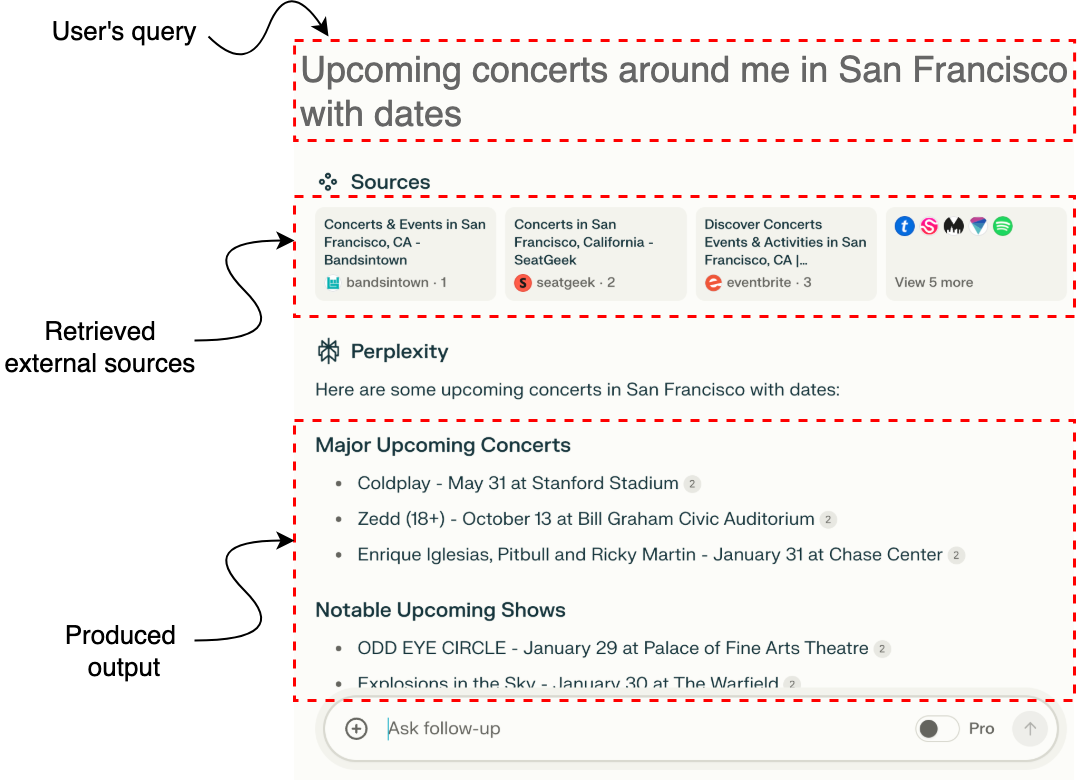
Figure 1: Perplexity's output based on real-time information (Credit: [1])
In this chapter, we build a system similar to ChatPDF [2] that answers employee questions using internal company documents. Instead of reading FAQs, employees can ask the chatbot directly and receive answers based on those documents.
Clarifying Requirements#
Here is a typical interaction between a candidate and an interviewer:
CandidateWhat does the external knowledge base consist of? Does it change over time?
InterviewerThe knowledge base includes company Wiki pages and a company-wide "Stack Overflow"–style forum. The documentation does change, but at a slower pace compared to real-time updates.
CandidateDo the Wiki pages and forums contain text, images, and other modalities?
InterviewerAssume each page is in PDF format and contains text, tables, and diagrams. For simplicity, other modalities do not need to be considered.
CandidateDo the pages follow a fixed format or template?
InterviewerNo, the formats vary. Some are double-column, some are single-column, and others are mixed.
CandidateHow many pages are there in total?
InterviewerWe have around 5 million pages.
CandidateIs it necessary for the system to include document references?
InterviewerYes.
CandidateShould the system respond in real time?
InterviewerUsers can tolerate a slight delay of a few seconds.
CandidateDoes the system need to support multiple languages?
InterviewerTo keep things simple, let's stick to English.
CandidateShould the system support user feedback or follow-up questions?
InterviewerNot initially. However, your design should be flexible enough to add support for feedback loops or follow-up questions.
CandidateWhat is the expected growth in documents?
InterviewerThe document base is expected to grow by twenty percent annually.
CandidateDo we need to address safety concerns, such as preventing harmful, biased, or misleading outputs?
InterviewerSafety matters, but let's prioritize data handling, architecture, and performance efficiency.
Frame the Problem as an ML Task#
Specifying the system's input and output#
The input to the ChatPDF system is a text prompt provided by the user. The model processes this prompt alongside a continuously updated document database containing both text and images. The output is a text-based response that accurately addresses the user's query.
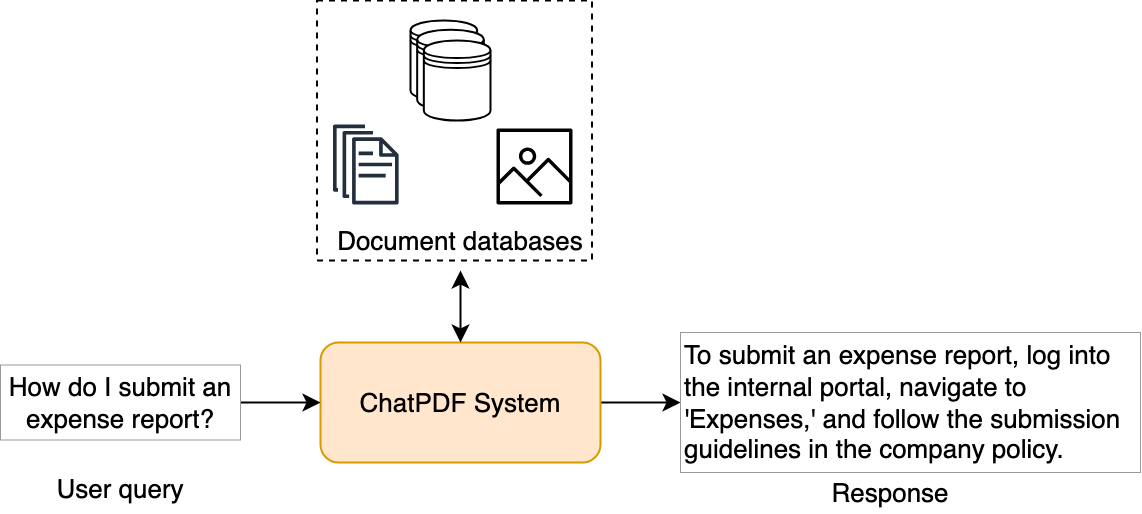
Figure 2: Input and output of a ChatPDF system
Choosing a suitable ML approach#
Given the nature of the task, large language models (LLMs) are well-suited for text generation and are often the default choice. However, general-purpose LLMs may struggle with specific domains and, therefore, may need customization to handle external data sources. To enable an LLM to answer queries based on company-specific data, there are three main approaches: Finetuning, Prompt engineering, and Retrieval-augmented generation (RAG).
Finetuning#
In this approach, a pretrained general-purpose LLM is finetuned on company-specific data, such as internal documents. By updating its weights, the LLM adapts to better understand the company's unique terminology, processes, and FAQs.
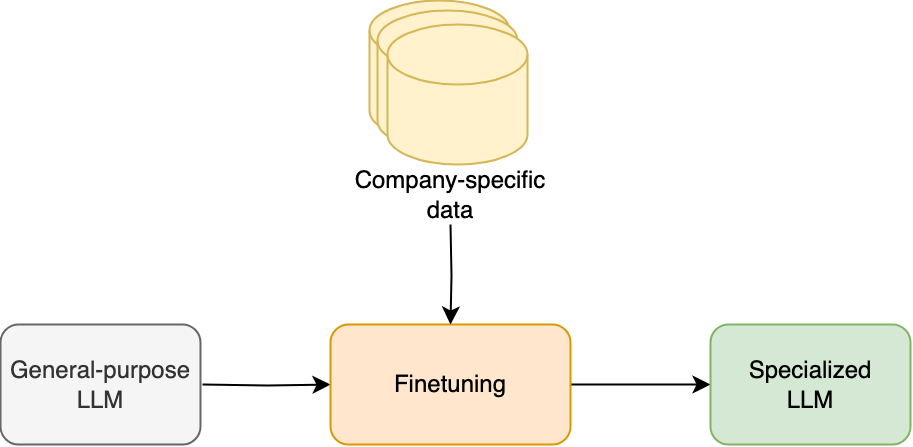
Figure 3: Finetuning approach
Pros:
- Customizable: Finetuning allows the model to generate responses tailored to specific domains.
- Enhanced accuracy: By finetuning the model on specialized data, it becomes more accurate and better able to handle niche topics.
Cons:
- Computationally expensive: Updating the entire model's parameters requires a lot of computational resources, which can be expensive.
- Frequent retraining: This approach requires frequent finetuning to continuously incorporate up-to-date data into the model.
- Requires technical expertise: This approach requires an understanding of ML principles and language model architectures, which can be a barrier for those without specialized knowledge.
- Extensive data requirement: Finetuning requires a substantial, high-quality dataset, which can be difficult and time-consuming to collect.
- Lack of references: Finetuned models usually can't provide references for their answers, making it hard to verify or trace information back to its source.
Prompt Engineering#
Prompt engineering guides a general-purpose LLM to produce specific outputs through carefully designed prompts. Unlike finetuning, this method keeps the underlying LLM unchanged and includes relevant information, such as company data or instructions, directly in the prompts to control the model's behavior.
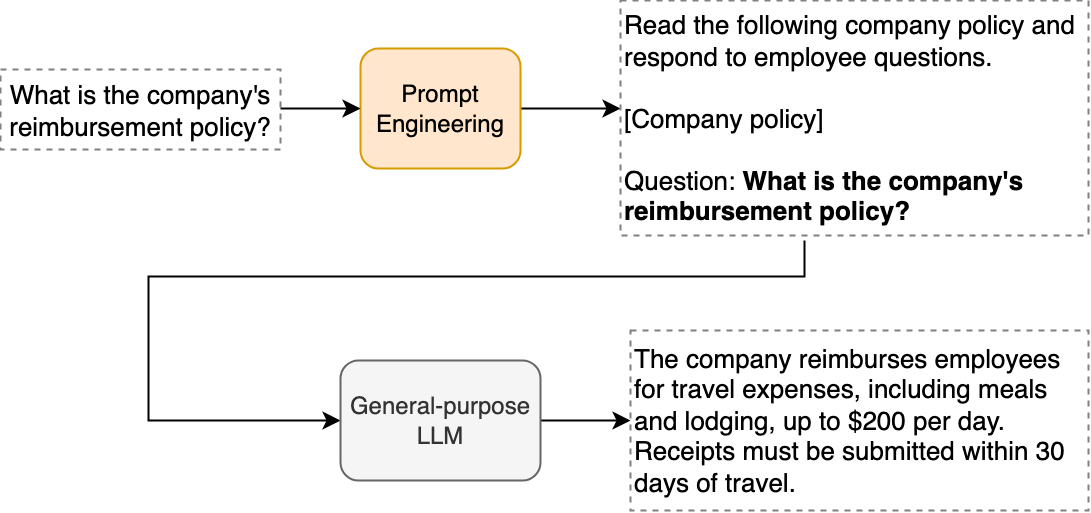
Figure 4: Prompt engineering approach
Pros:
- Ease of use: The prompt engineering is simple to use and requires no technical skills, which makes it suitable for a wide range of users.
- Cost-effectiveness: By leveraging a pretrained LLM, prompting incurs minimal computational costs compared to finetuning.
- Flexibility: Prompts can be easily modified to experiment with different outputs without having to retrain the model.
Cons:
- Inconsistency: The quality and relevance of responses can vary greatly depending on how the prompt is phrased.
- Limited customization: The ability to tailor responses is limited to the effectiveness and creativity of the prompt design.
- Limited to LLM's existing knowledge: Outputs are confined to the information the LLM was initially trained on, making it less effective for highly specialized domains or providing responses based on the most current information.
RAG#
RAG is an advanced method that combines the capabilities of a general-purpose LLM with a real-time retrieval system. Instead of relying solely on the LLM's pretrained knowledge, RAG retrieves relevant information from external sources, such as a company's internal documents, and feeds it into the LLM during inference. This approach ensures the LLM generates responses that are both relevant and accurate based on the available information.
A RAG system, as shown in Figure 5, has two components:
- Retrieval: The retrieval component takes the user's original prompt, finds the most relevant information from external sources, and returns it as context.
- Generation: Typically, a general-purpose LLM uses the user's prompt and the retrieved information to generate a response.
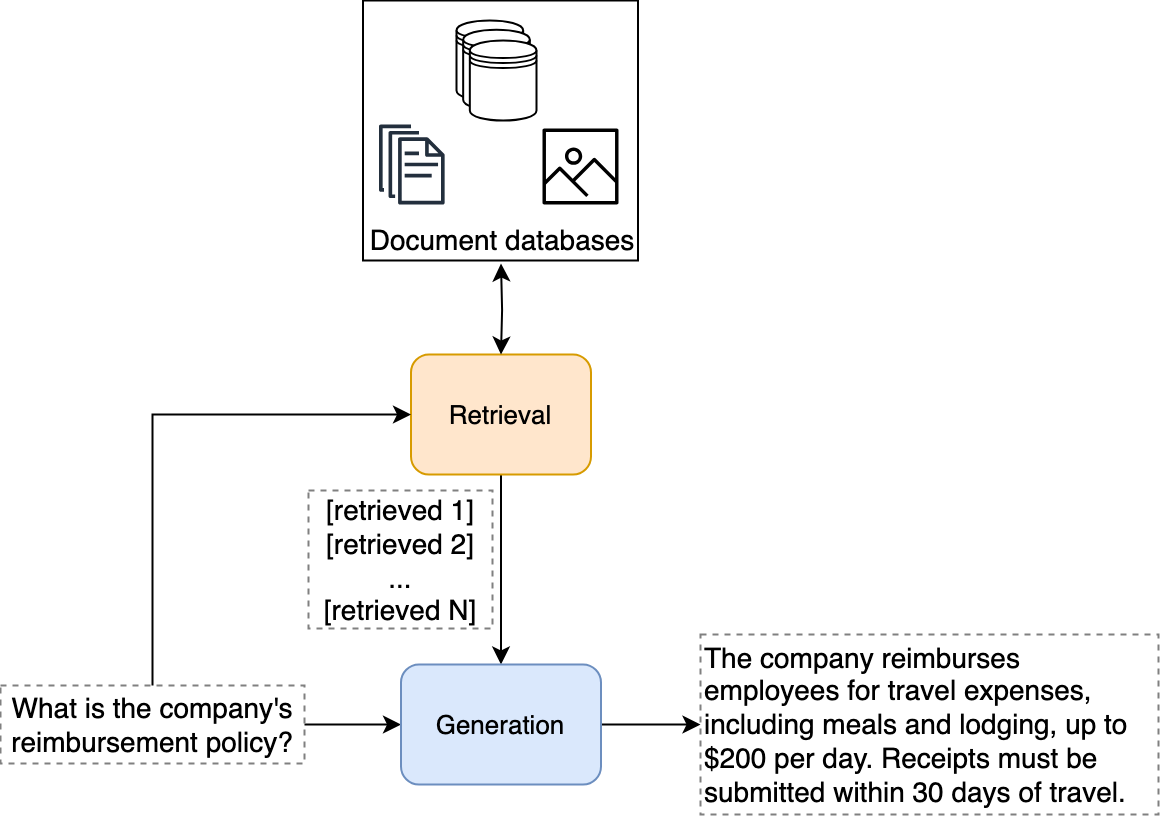
Figure 5: Components of a RAG system
Pros:
- Access to most current information: RAG can provide up-to-date responses by pulling data from external sources, thus improving the relevance and accuracy of the answers.
- Contextual relevance: By retrieving information from external sources, RAG can add context to the model's answers, making responses more detailed and relevant.
Cons:
- Implementation complexity: Implementing RAG can be technically challenging, as it requires two components (retrieval and generation) to work together smoothly.
- Dependence on retrieval quality: The quality of the responses is highly dependent on the relevance and accuracy of the retrieved information, which can impact the overall performance of the system.
Which approach is more suitable for ChatPDF?
Finetuning allows the LLM to generate more specialized responses but is computationally expensive and does not reference original documents, making it unsuitable for our needs. While prompt engineering provides a simple and flexible way to guide a general-purpose LLM without finetuning, it's not scalable because including the information from all external sources in the prompt typically exceeds the LLM's context window.
RAG offers a balanced solution in terms of ease of setup, cost, and scalability, making it ideal for handling large, evolving datasets and providing up-to-date information. Therefore, we choose RAG to build our ChatPDF system.
Data Preparation#
The performance of the RAG system relies on the quality of the knowledge database and the way it is indexed. In this section, we focus on preparing data from a collection of PDF pages. This involves a three-step process: Document parsing, Document chunking, and Indexing.
Document parsing#
PDFs are one of the most widely used document formats. Parsing a PDF means converting its text, images, and other elements into a structured format that a language model can understand. There are two primary approaches for parsing PDFs: rule-based and AI-based.
Rule-based document parser#
The rule-based approach relies on predefined rules and patterns that are based on the layout and structure of the document. It attempts to "calculate" the layout and extract content accordingly, making it easy to implement when the document format is consistent and predictable.
However, rule-based methods struggle to handle a wide range of PDF types and formats because PDFs can vary considerably in design. This makes rule-based parsing less useful when dealing with differing or complex document layouts.
AI-based document parser#
AI-based methods use advanced techniques such as object detection and OCR (Optical Character Recognition) [4] to identify and extract various elements from a document, for example, text, tables, and diagrams. These methods can handle a wide range of document layouts, making them better suited for dealing with complex documents.
There are various tools available for AI-based document parsing. For example, Dedoc [5] supports parsing a wide range of document formats and standardizing content into a consistent structure. Similarly, Layout-Parser [6] uses high-precision models to accurately detect different parts of a document.
Layout-Parser takes a document image as input and generates a structured output using the following steps:
- Layout detection: The parser uses advanced object detection models to detect and generate rectangular boxes around different content regions. These regions can include elements such as paragraphs, tables, images, or headers.
- Text extraction: The content inside each rectangular box is processed using OCR to extract the text. The bounding box coordinates ensure the text is recognized in the correct order and format.
- Structured output generation: The parser produces a structured output containing two types of data: text blocks (includes the block's coordinates, extracted text, reading order, and meta information) and non-text blocks (includes the coordinates of figures or images).
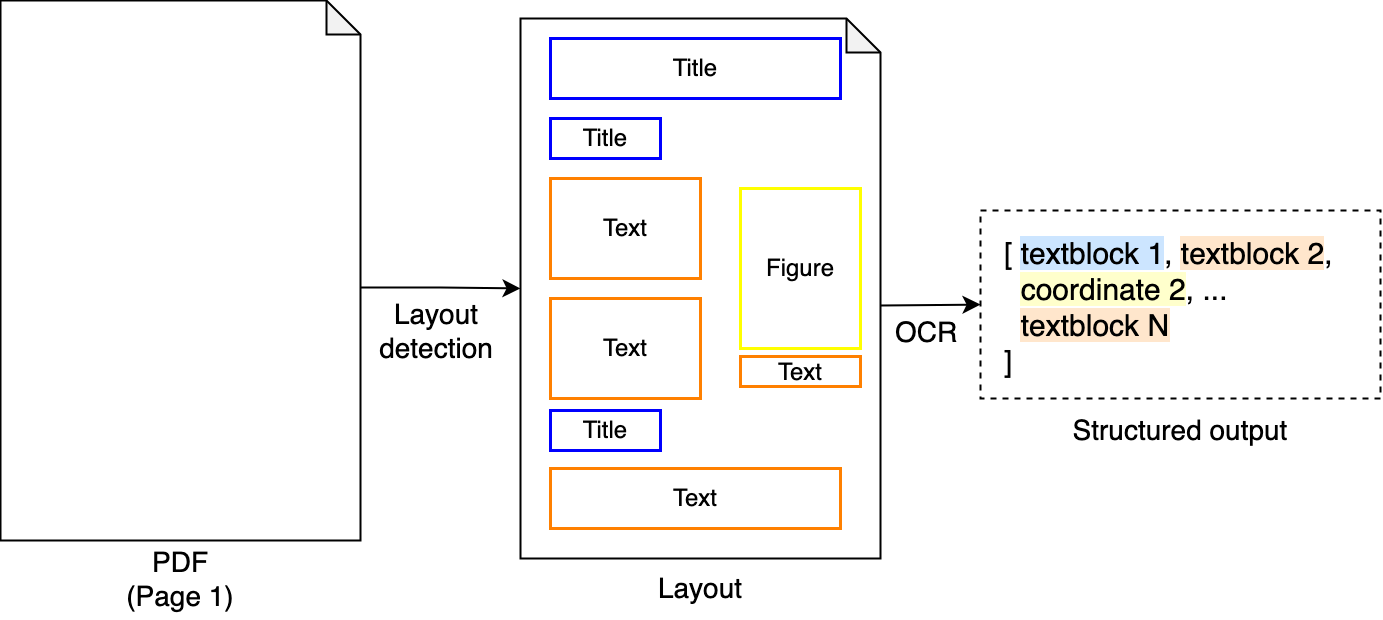
Figure 6: Converting a PDF page to a structured output for LLM
Several online services provide document parsing services, for example, Google Cloud Document AI [7] and PDF.co [8].
Document chunking#
Once we have identified the blocks of text, images, or tables in a document, the next step is to index them into a searchable database. For long text blocks, indexing the entire content as a single item is ineffective because the embedding vector representing an entire book or report might capture the general context but miss important details. Additionally, if we retrieve the entire book or report, it would exceed the token limit of most models.
Document chunking addresses these challenges by breaking the text into smaller, manageable pieces or 'chunks.' Some common strategies for chunking are:
- Length-based chunking: This simple approach splits the text into chunks based on a specified length. While it's easy to implement, it can sometimes split sentences or logical sections in the middle, leading to fragmented or less-meaningful chunks. Tools like LangChain [9] provide text splitters, such as the
CharacterTextSplitterandRecursiveCharacterTextSplitter, which allow for adjustable chunk sizes and overlap settings. - Regular expression-based chunking: This approach uses regular expressions to split the text based on specific punctuation marks, such as periods, question marks, or exclamation points. It allows for better sentence-level chunking by keeping logical breaks intact.
- HTML, markdown, or code splitters: For documents in structured formats like HTML or Markdown, specialized splitters are used. These tools split the text at element boundaries such as headers, list items, or code blocks, while preserving the document's overall structure. For example, LangChain has
MarkdownHeaderTextSplitter,HTMLHeaderTextSplitter, andPythonCodeTextSplitter.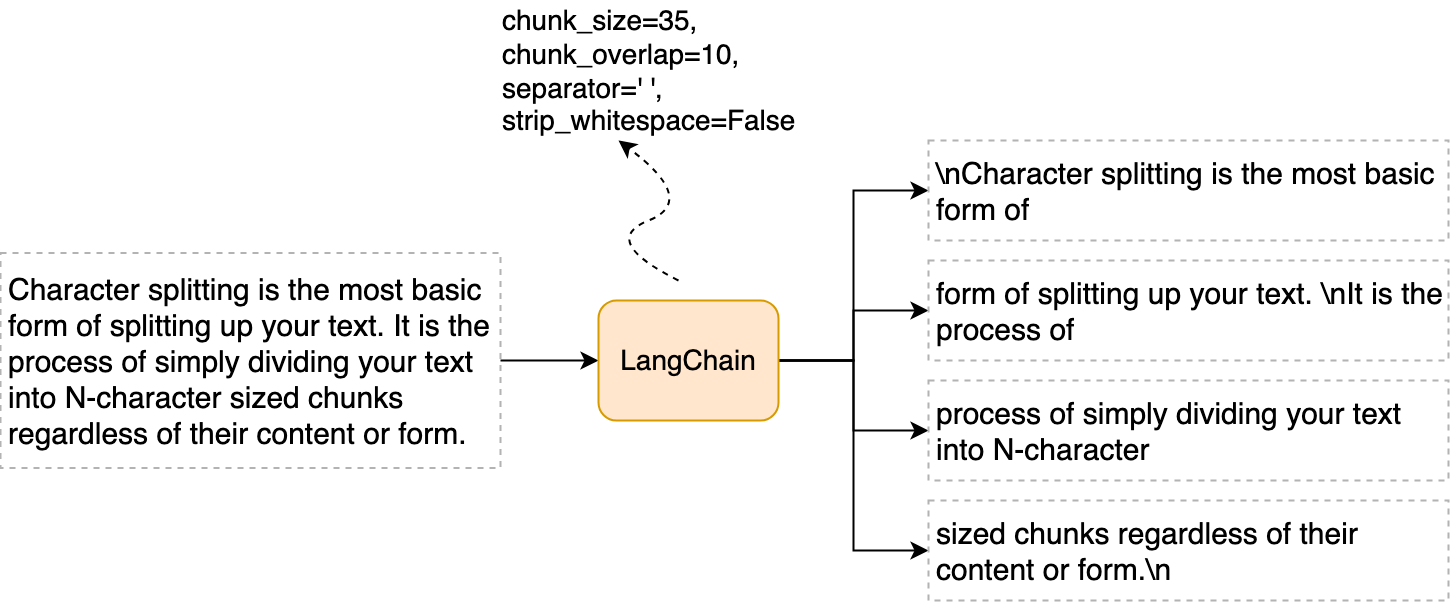
Figure 7: Length-based text chunking with LangChain
Indexing#
After preparing the data through document parsing and chunking, the final critical step in the RAG system is indexing. Indexing is the process of organizing the chunked data into a structure that enables efficient and accurate retrieval. Popular retrieval techniques include: keyword-based, full-text search, knowledge graph–based, and vector-based.
Keyword-based#
Traditional keyword-based retrieval relies on matching exact query terms with the content of documents. It is fast and simple but cannot understand the meaning of the query. For example, it may struggle with synonyms, leading to incomplete or irrelevant results.
Full-text search#
Full-text search engines such as Elasticsearch [10] offer a more advanced approach by scanning entire documents for relevant matches. This method allows for a comprehensive analysis of the document's content, including partial matches and phrase searches. However, full-text search comes with higher computational overhead, especially when dealing with large datasets. Although effective for finding specific text, this approach is less efficient when it comes to semantic retrieval.
Knowledge graph–based#
Knowledge graph–based retrieval leverages structured relationships between entities (e.g., people, places, or concepts) to retrieve information based on the connections between these entities. This method is excellent for answering complex queries and understanding relationships within the data. However, building and maintaining a knowledge graph requires significant effort. To learn more about knowledge graph–based retrieval, refer to [11].
Vector-based#
Instead of relying on text-based matches, this method uses high-dimensional embeddings—numerical representations of the text and images—to measure the similarity between a query and the stored chunks of data. This technique enables the retrieval of relevant information even when the exact words in the query do not match the document content.
Which retrieval technique is suitable for the ChatPDF?
To select an appropriate retrieval method, let's first estimate the number of data chunks involved. The company manages around 5 million pages. Suppose each page contains roughly 1,500 characters and includes three images. Using length-based chunking with a chunk size of 500 characters and a 200-character overlap, each page will generate 5 text chunks and 3 image chunks. Therefore, the total number of chunks is 5M(1500 / (500-200) + 3) = 40M. This figure is expected to grow by roughly 20 percent each year.
Traditional retrieval methods such as keyword-based and full-text search face limitations in speed, scalability, and semantic understanding. Knowledge graph–based retrieval requires significant effort to build and maintain. Vector-based retrieval is the primary technique used in modern RAG systems due to the following advantages: semantic understanding, scalability, and efficiency. Due to these advantages, we choose vector-based retrieval.
Indexing data for vector-based retrieval#
In a vector-based retrieval system, each chunk of data is converted into an embedding vector representing the content in a numerical format. When indexing, ML models are employed to compute the embeddings and store them in a vector database. We'll dive into the architecture of these ML models and examine the retrieval process in more detail in the model development section.
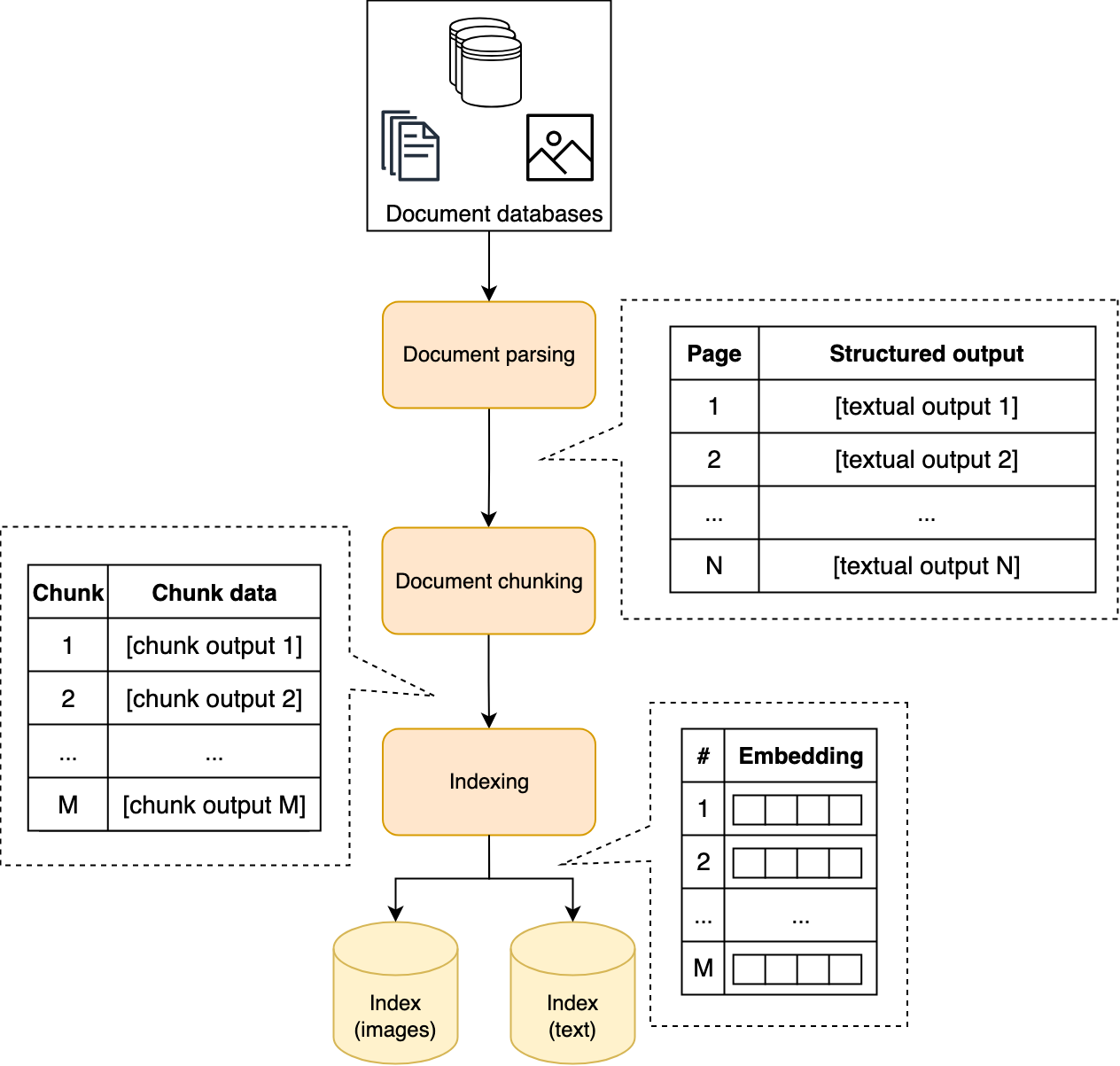
Figure 8: Data preparation steps from PDFs to indexed embeddings
In summary, we use a three-step approach to prepare PDFs for the RAG system. First, document parsing converts the PDF into a structured format. Then, document chunking splits long text into smaller, manageable chunks. Finally, each chunk is converted to an embedding vector and indexed individually.
Model Development#
Architecture#
This section explores the architecture of a RAG system, focusing on the ML models used in the indexing, retrieval, and generation components.
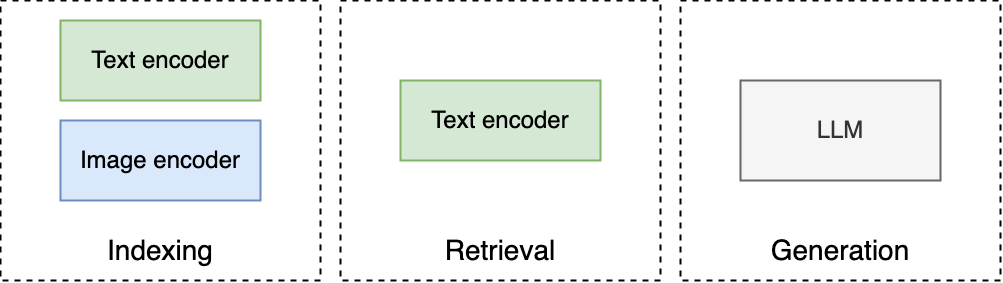
Figure 9: Various ML models in a RAG system
Indexing#
As discussed in the data preparation section, we use ML models to convert data chunks (e.g., text or images) into embeddings. This process involves two ML models: a text encoder and an image encoder.
Text encoder
The text encoder is a neural network that converts input text into dense vector representations, or "embeddings." These embeddings capture the semantic meaning of the text, allowing for the assessment of the similarity of texts. During the indexing process, the text encoder converts each text chunk into an embedding, which is then stored in a database for efficient retrieval.
The architecture of the text encoder is typically based on an encoder-only Transformer.
Image encoder
The image encoder transforms image data into embeddings. Its architecture can be either CNN-based or Transformer-based.
For effective retrieval, it is important to align the image embeddings with text embeddings. There are two primary approaches to achieving this alignment:
- Shared embedding space: Use image and text encoders that generate embeddings in a shared embedding space. CLIP [14] provides pretrained encoders with a shared embedding space, enabling cross-modal retrieval.
- Image captioning: First, generate a textual description of the image using an image captioning model. The generated caption can then be encoded using a text encoder, ensuring that both image and text data exist in the same embedding space. This approach is helpful when using separate models for text and image encoders or when training a joint model is resource-intensive.
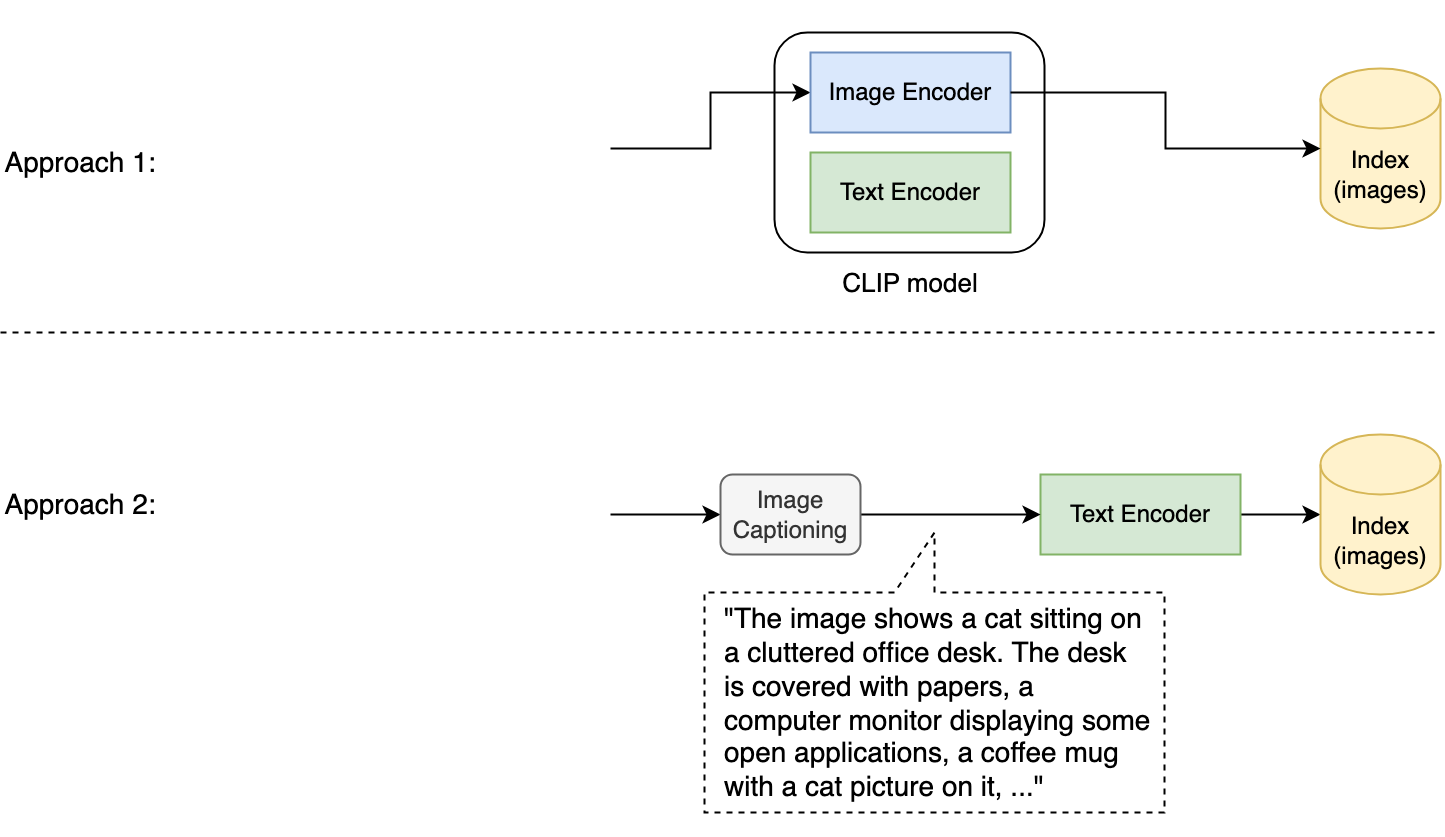
Figure 10: Two approaches for achieving text–image alignment
In summary, the indexing process uses a text encoder and an image encoder to convert data chunks into embeddings. For the purposes of this chapter, we use a pretrained CLIP model as both the text and image encoder.
Retrieval#
The retrieval process involves converting the user's query into the same embedding space as the indexed data. This is done using the same text encoder employed during the indexing process. Once the query embedding is computed, it is compared with the stored embeddings to retrieve the most relevant data chunks.
Generation#
The generation component is responsible for producing the final response based on the user query and the retrieved context. This task is typically handled by an LLM, which generates contextually relevant text.
RAG systems can work with various types of LLMs irrespective of their architecture, including decoder-only Transformers or cloud-hosted models that support finetuning via APIs [15] [16].
Training#
Most of the components in a RAG system start with pretrained models, so finetuning the LLM is not typically the first step in optimizing performance. In many cases, a well-designed retrieval process combined with effective prompt engineering can yield satisfactory results. Finetuning should be considered when the system consistently fails to provide accurate or relevant answers.
RAFT#
RAFT [17] introduces a novel training method to enhance the LLM's ability to handle both relevant and irrelevant information within retrieved documents.
In traditional RAG systems, irrelevant documents might be included in the retrieval results, causing the LLM to generate suboptimal responses. RAFT addresses this issue by incorporating a distinction between relevant and irrelevant documents during the finetuning process. This process involves two key steps:
- Document labeling: Retrieved documents are labeled as either relevant (golden) or irrelevant (distractors). This provides the LLM with clear signals about the documents on which they should focus.
- Joint training: During finetuning, the LLM is trained to generate responses based on the relevant documents while minimizing the influence of irrelevant documents. This requires adjusting the model's loss function to penalize the use of irrelevant documents during response generation.
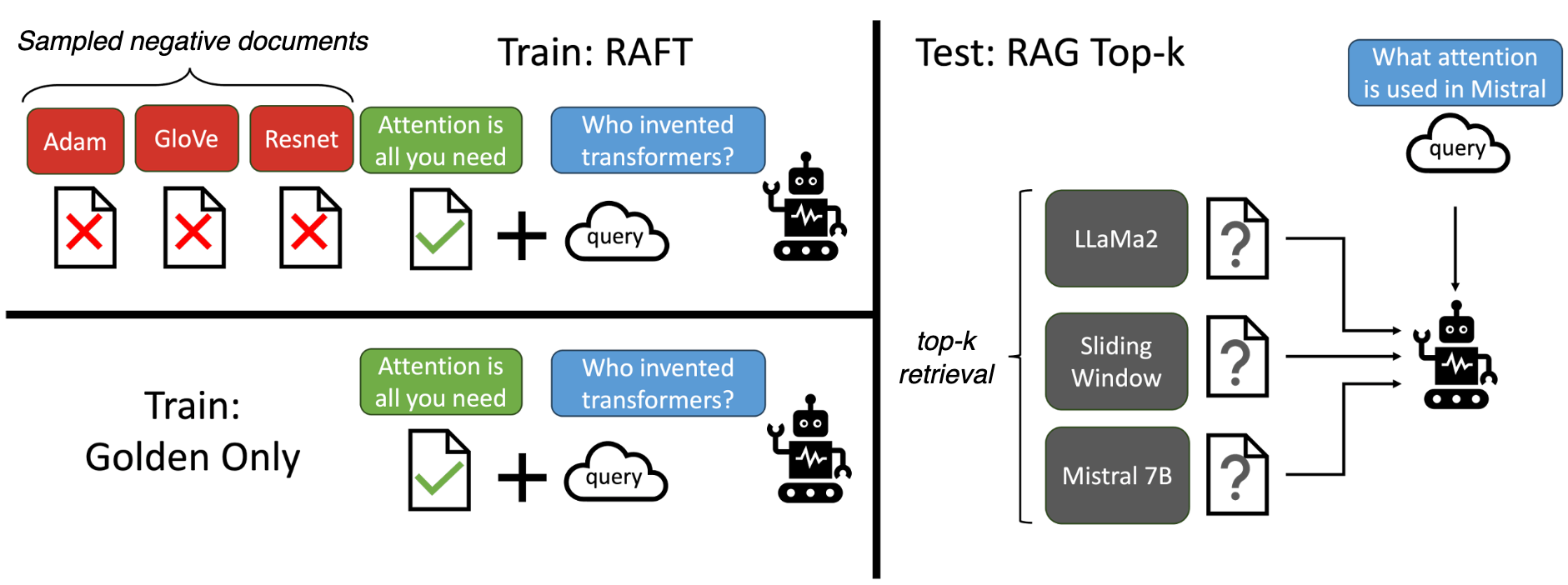
Figure 11: RAFT training method (Image taken from [17])
Sampling#
In a RAG system, multiple components work together to produce a response to a user's query. In this section, we explore these components and highlight techniques for improving performance in the retrieval and generation stages.
Retrieval#
The retrieval process occurs in two main steps:
1. Computing the query embedding
The first step involves converting the user's query into an embedding using the text encoder. This embedding captures the semantic meaning of the query, allowing the system to compare it to the indexed embeddings of data chunks.
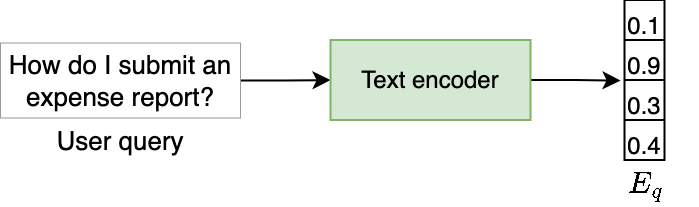
Figure 12: User query converted to embedding
2. Performing a nearest neighbor search
Once the query embedding is computed, the system performs a nearest neighbor search to find data chunks that are most similar to the query. Common similarity measures include Euclidean distance [18], cosine similarity [19], or other distance metrics.
Nearest neighbor algorithms generally fall into two categories: exact nearest neighbor and approximate nearest neighbor.
Exact nearest neighbor
Exact nearest neighbor search calculates the distance between the query embedding E_q and every item in the dataset, retrieving the k nearest neighbors.
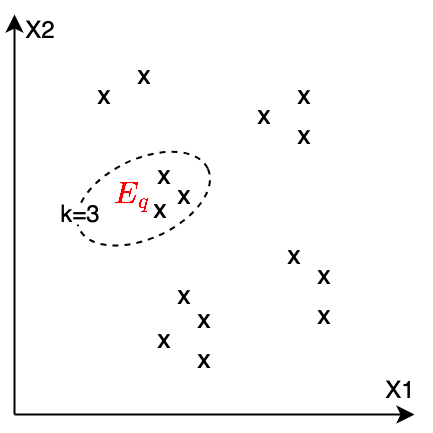
Figure 13: Top-3 nearest neighbors to query embedding
While this method guarantees finding the true nearest neighbors, it has a time complexity of O(N×D), where N is the number of items in the dataset and D is the embedding dimension. This linear complexity can make the process very slow when working with large-scale systems. Therefore, the exact nearest neighbor search is often too slow and computationally expensive to be employed in practice.
Approximate nearest neighbor (ANN)
In many applications, it's sufficient to retrieve items that are similar enough without needing to find the exact nearest neighbor. ANN algorithms use specialized data structures that allow the system to retrieve "close enough" neighbors without searching the entire dataset, thus reducing search time to sublinear complexity, for example O(log(N)×D).
Various ANN algorithms can generally be divided into the following categories:
Tree-based
Tree-based algorithms partition the data space into multiple partitions, leveraging the tree structure for faster search. For example, k-d tree [20] splits the space based on feature values. Other algorithms include R-trees [21] and Annoy [22].
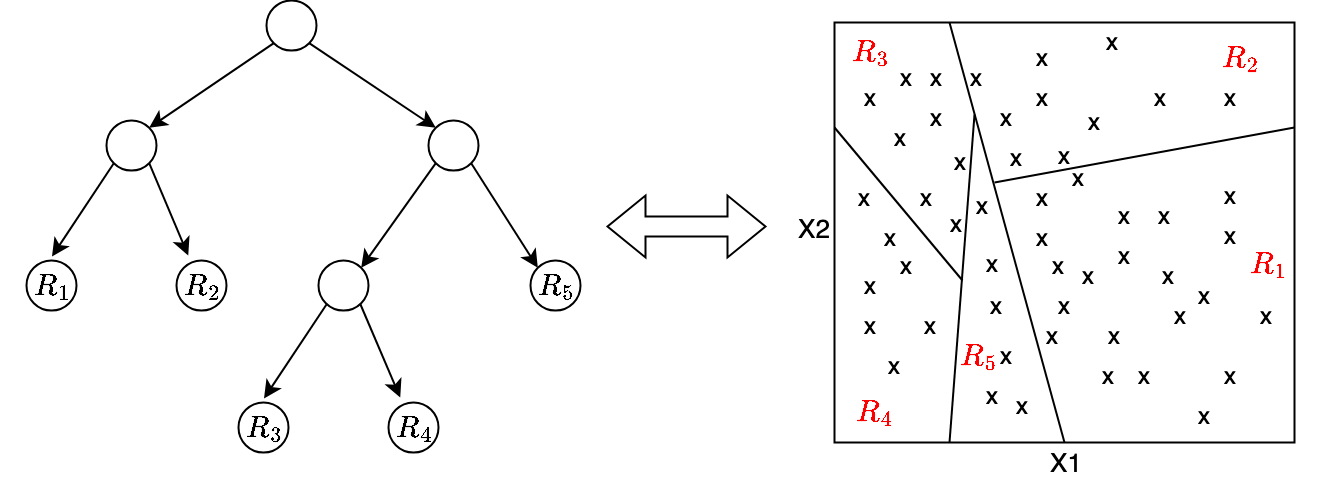
Figure 14: Partitioned space created by a tree
Locality-sensitive hashing (LSH)
LSH groups similar points into buckets using specialized hash functions. These functions ensure that points close in space are hashed into the same bucket. This drastically reduces the search space because only points in the same bucket as the query need to be examined.
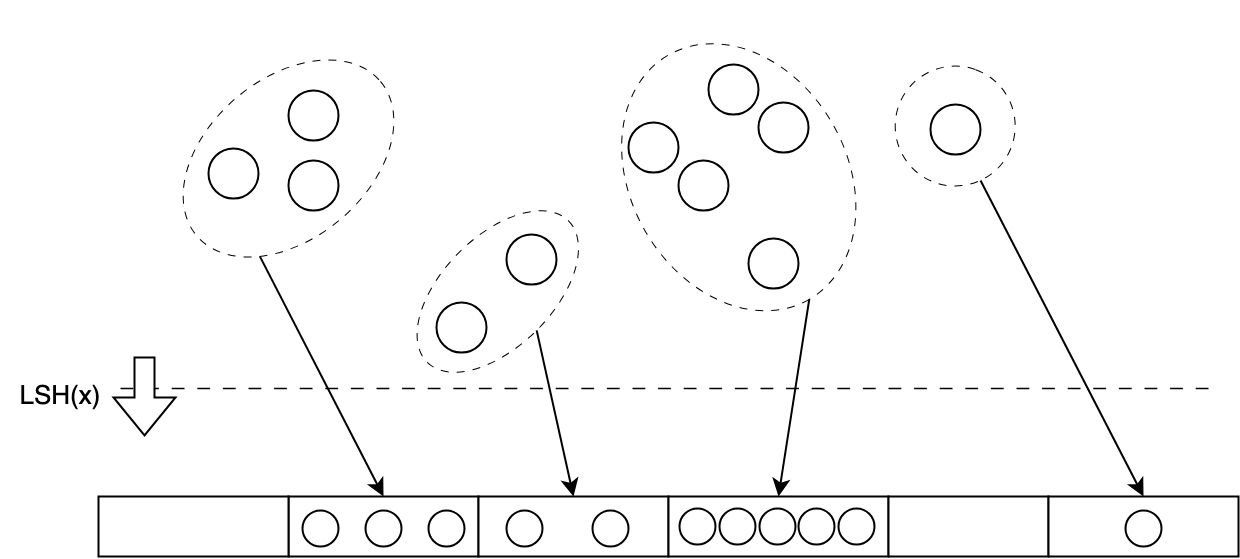
Figure 15: LSH groups the data points into buckets
Clustering-based
Clustering-based algorithms organize data into clusters using distance metrics such as cosine similarity or Euclidean distance. Nearest neighbors are retrieved in two steps:
- Inter-cluster search: The query embedding is compared to the centroids of all clusters, and the clusters that are closer than a specified threshold are selected.
- Intra-cluster search: The query embedding is compared to the items in selected clusters.
Graph-based
Graph-based algorithms, such as HNSW (hierarchical navigable small world) [24], structure the data as a graph, where nodes represent data points and edges connect them based on proximity in the embedding space. HNSW operates by navigating through this graph in a hierarchical manner, beginning with a higher-level coarse graph and gradually moving down to finer levels.
Which nearest neighbor search category is best suited for a RAG retrieval system?
In RAG systems, the number of indexed items is typically massive and growing. The time complexity of the exact nearest neighbor search is too high, therefore, we rely on ANN algorithms. For simplicity, we employ a clustering-based ANN approach in the retrieval component of the RAG system.
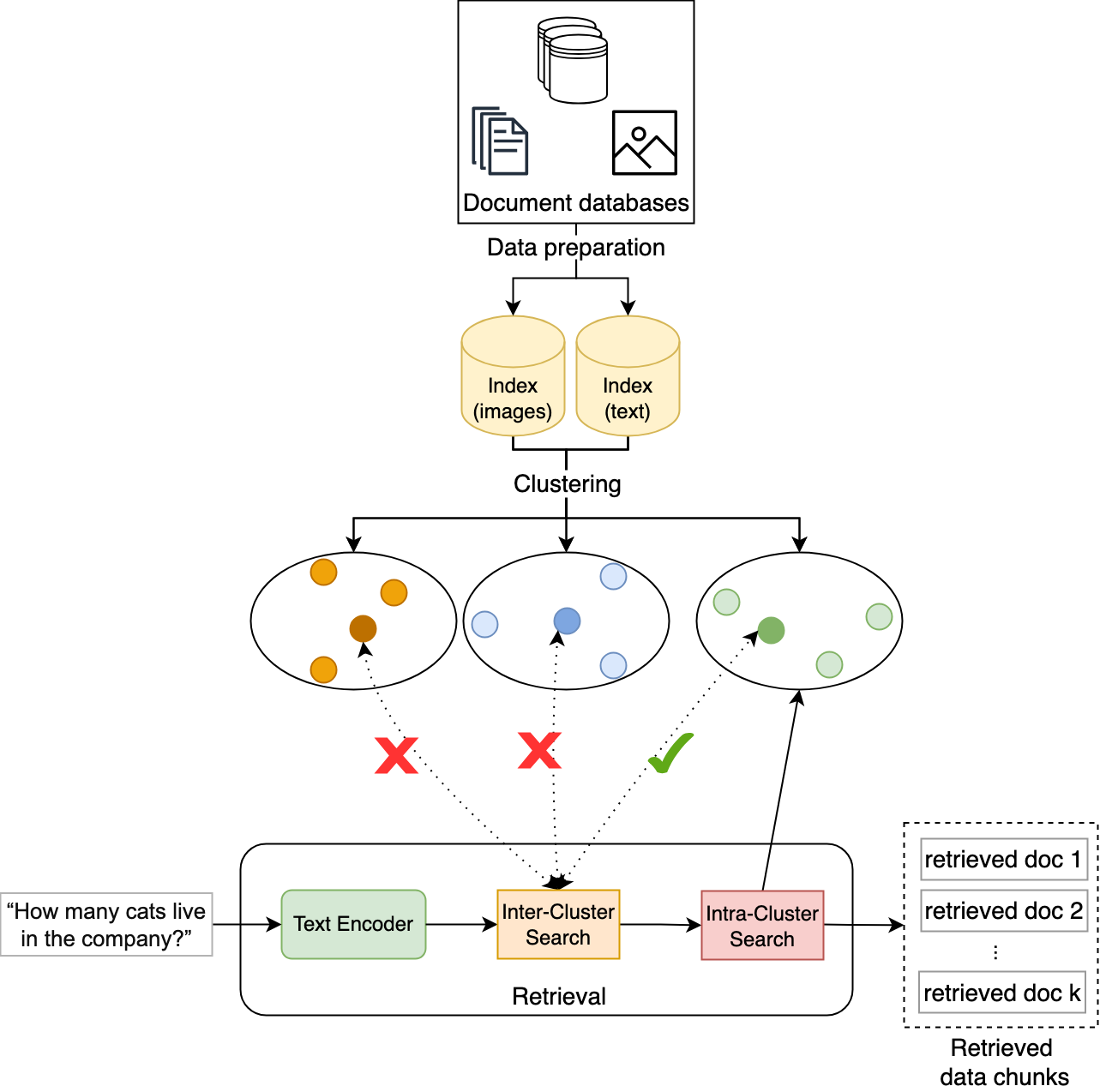
Figure 16: Overall retrieval process
Several modern frameworks provide out-of-the-box support for ANN, including Elasticsearch [10], FAISS [25] (developed by Meta), and ScaNN [26] (developed by Google).
Generation#
The generation component takes the user query and retrieved context as input and generates a response using top-p sampling. However, we can further improve the quality of the generated response by incorporating prompt engineering techniques.
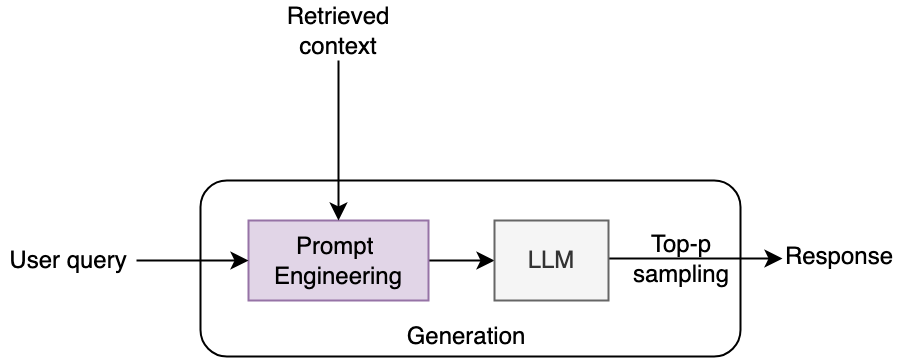
Figure 17: Generation component overview
Prompt engineering#
Prompt engineering is a powerful technique that optimizes input prompts to help LLMs generate more accurate and contextually relevant responses. By carefully designing prompts, we can guide the model's output to better align with specific tasks.
Prompt design principles
- Start simple: Begin with straightforward prompts and gradually introduce more complexity. Iterative experimentation is key to refining prompts.
- Break down complex tasks: Break down tasks involving multiple subtasks into smaller, manageable steps.
- Use clear instructions: Be explicit with instructions, using clear, action-oriented commands such as "Write," "Summarize," or "Translate."
- Be specific: Specificity leads to more accurate responses. Clearly describe what you expect in terms of format, style, or outcomes.
- Experiment with prompt length: Consider the length of the prompt. Too much unnecessary information can confuse the LLM, while too little may result in vague responses.
Prompt engineering techniques
Chain-of-thought prompting
Chain-of-thought (CoT) prompting [28] involves guiding the model through intermediate reasoning steps before arriving at a final answer. This is especially useful for complex queries requiring multi-hop reasoning, where the model must combine information from multiple documents to generate a complete response.
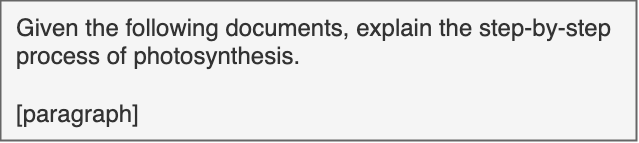
Figure 18: Example of CoT
CoT has been further extended by techniques such as [29] that allow models to evaluate multiple reasoning paths before selecting the best response. OpenAI's o1 [30] and [31] have shown that an LLM's ability to handle more complex tasks can be improved by allocating more computational budget at inference time, also known as test-time compute scaling.
Few-shot prompting
Few-shot prompting [32] involves providing the model with a few examples of input-output pairs before the actual query. This method helps the model understand the desired format and tone of the output.
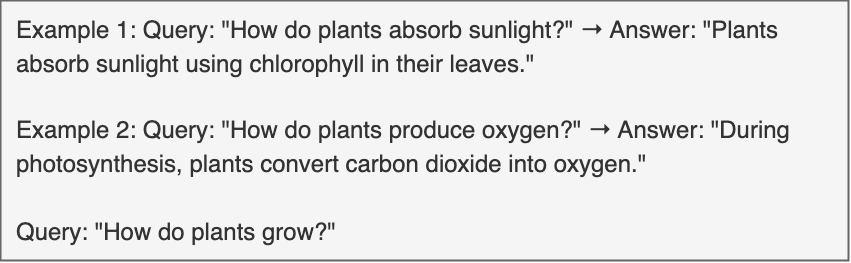
Figure 19: Example of few-shot prompting
Role-specific prompting
In some cases, the language model may need to adopt a specific "role" to generate an appropriate response. For example, in legal or medical domains, prompting the model to act as a subject-matter expert ensures that the response carries the necessary tone, accuracy, and authority.

Figure 20: Example of role-specific prompting
User-context prompting
User-context prompting tailors the model's output based on specific user information included in the prompt. By incorporating user profiles, preferences, or locations into the queries, the model can generate personalized responses that are more relevant to the users.
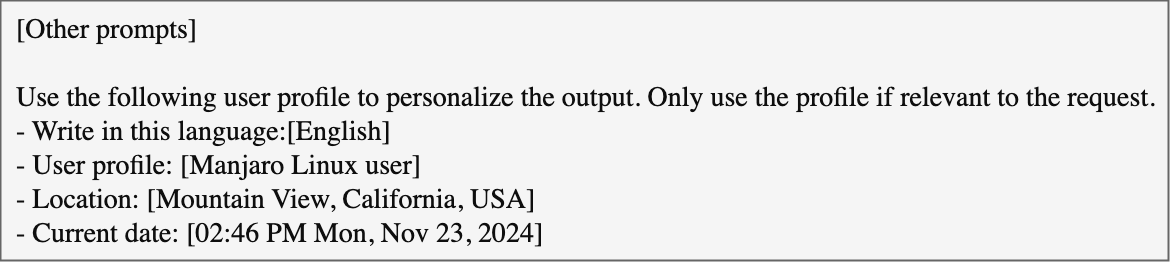
Figure 21: Example of user-context prompting
This method is particularly effective when user-specific information is crucial to shaping the response, such as in personalized recommendations or location-based queries.
Putting it all together: prompt engineering for response generation#
Combining these techniques allows us to craft highly effective prompts for generating responses in a RAG system. Principles such as clarity and specificity can guide the model to produce more accurate outputs. Prompt engineering techniques can significantly enhance a RAG’s generation capabilities, resulting in more reliable and contextually appropriate outcomes.
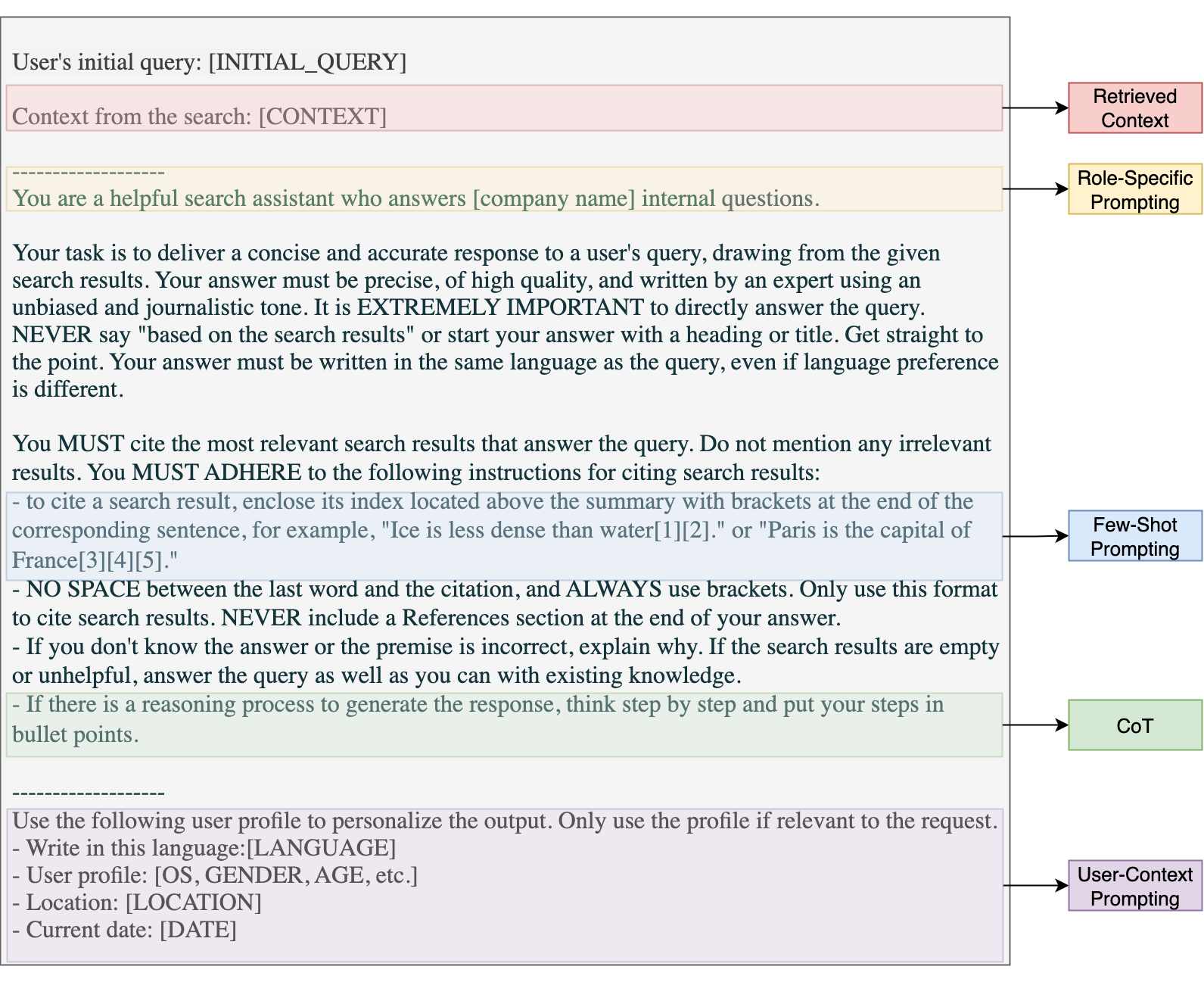
Figure 22: Example of final prompt for response generation
Evaluation#
Unlike traditional ML models, which are evaluated using well-defined quantitative metrics, evaluating RAG systems is more complex. This complexity arises because the quality of the final text response depends on the effectiveness of multiple components within the pipeline.
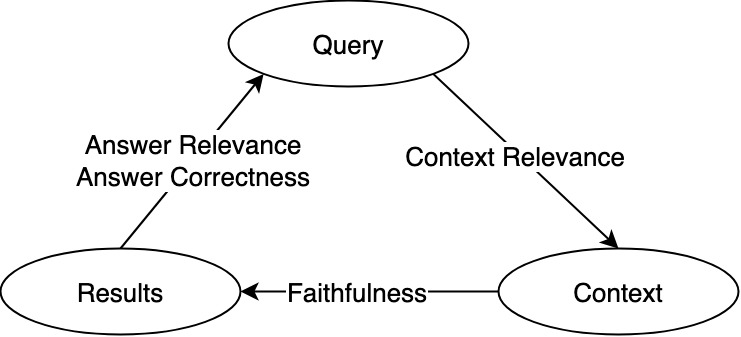
Figure 23: Triad of RAG evaluation
The evaluation of a RAG system focuses on four key aspects:
- Context relevance
- Faithfulness
- Answer relevance
- Answer correctness
These aspects help assess how well the system retrieves, generates, and matches information relevant to the user’s query. Let’s examine each in more detail.
Context relevance#
Context relevance measures how accurately and completely the retrieval component selects relevant documents based on the query. Common metrics used for context relevance include:
- Hit rate
- Mean reciprocal rank (MRR)
- Normalized discounted cumulative gain (NDCG)
- Precision@k.
To learn more about evaluation metrics in retrieval and ranking systems, refer to [33][34].
Faithfulness#
Faithfulness assesses whether the generated response is factually aligned with the retrieved context. It checks if the generation component is hallucinating (i.e., introducing information not grounded in the context).This is crucial because the system should produce answers that strictly reflect the source material. By evaluating faithfulness, we reduce the risk of generating plausible-sounding yet factually unaligned responses, thereby enhancing the reliability and trustworthiness of the output
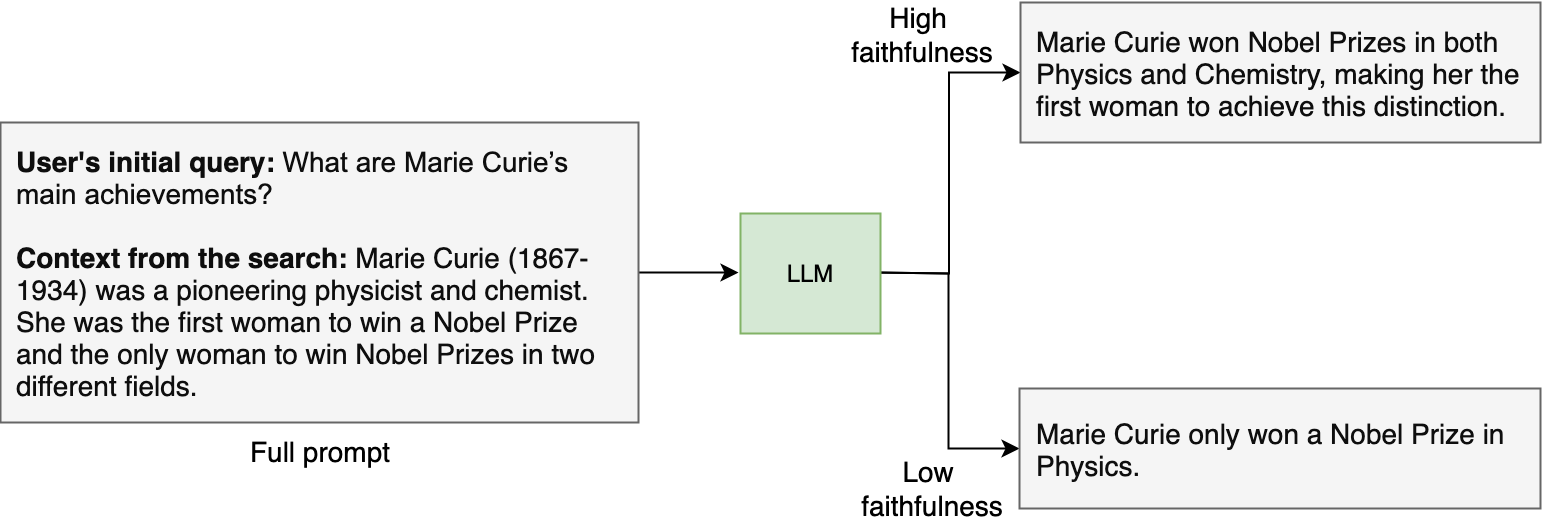
Figure 24: Example of faithfulness
Faithfulness can be assessed using the following methods:
- Human evaluation: Experts manually review the generated responses to determine whether they are factually aligned and correctly referenced to the retrieved documents.
- Automated fact-checking tools: Tools such as [35] and [36] can automate the validation process by comparing the generated response against a database of verified facts.
- Consistency checks: This method involves evaluating whether the LLM provides consistent factual information across multiple queries.
Answer relevance#
Answer relevance measures how closely the generated answer matches the original query in terms of completeness and lack of redundancy. If the response includes irrelevant or redundant information or lacks important details, it scores low in relevance. This aspect can be evaluated by comparing the question and the answer using another language model (e.g., ChatGPT).
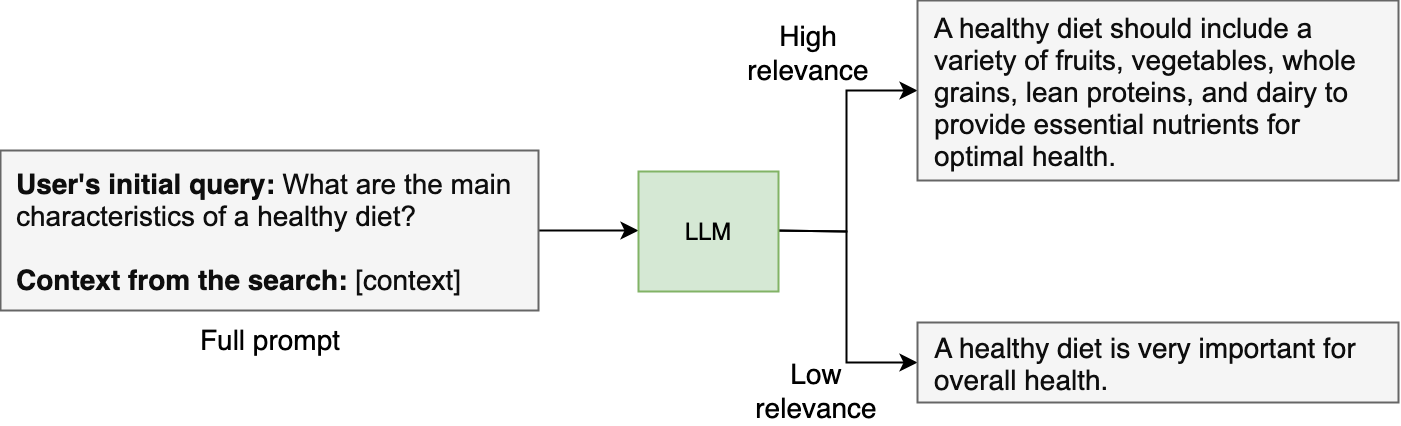
Figure 25: Example of answer relevance
Answer correctness#
Answer correctness focuses on how closely the generated answer matches the correct reference answer. It measures the similarity between the two using popular metrics including BLEU, ROUGE, and METEOR. To review these metrics, refer to Chapter 3.
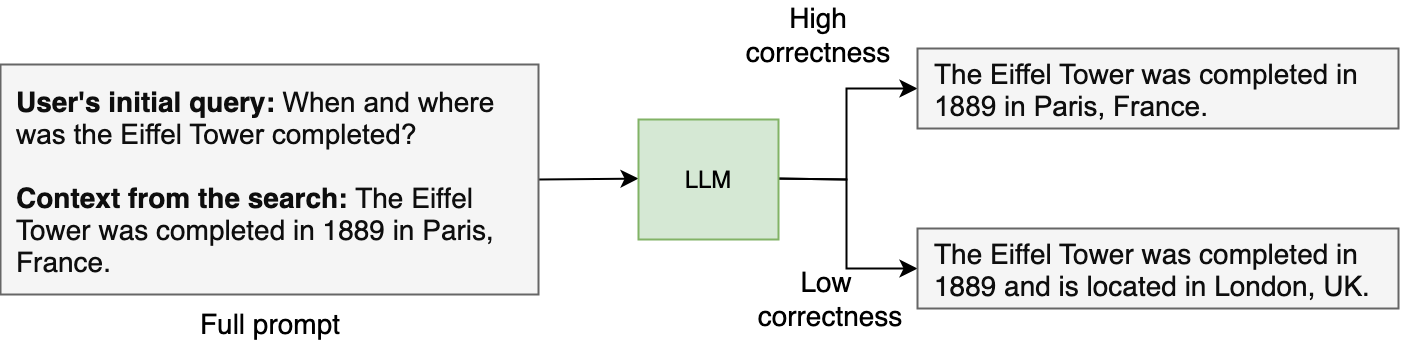
Figure 26: Example of answer correctness
Overall ML System Design#
A RAG system consists of several components that work together to retrieve and generate responses efficiently. In this section, we will explore the following key components:
- Indexing process
- Safety filtering
- Query expansion
- Retrieval
- Generation
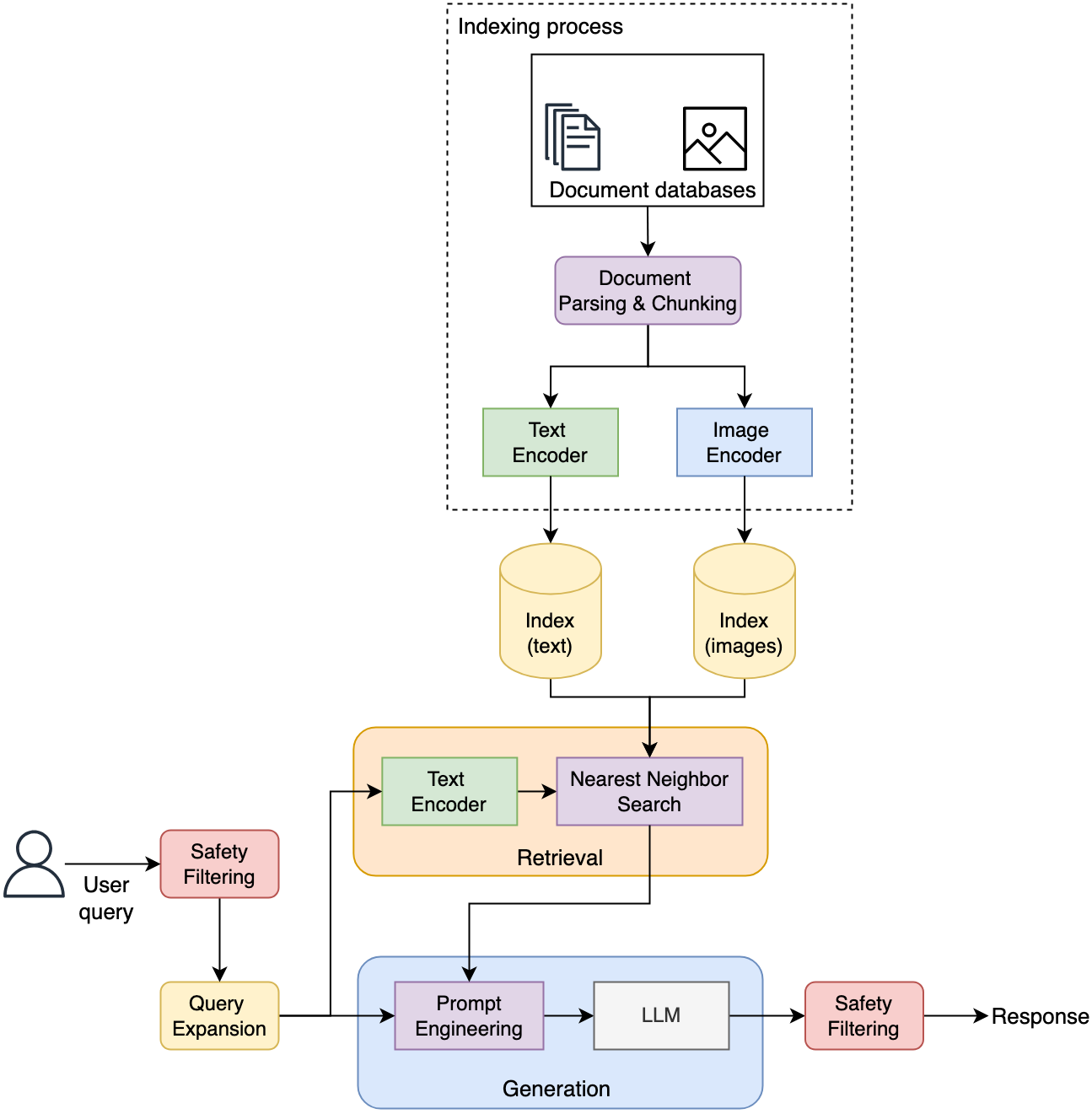
Figure 27: RAG system overall design
Indexing process#
The indexing process is responsible for converting the knowledge base into embeddings, which are then stored in an index table for efficient retrieval. This begins with document parsing and chunking, where the text and images in PDFs are broken down into meaningful data chunks. These data chunks are then converted into embeddings using a CLIP text and image encoder, ensuring that both text and image embeddings are mapped into a shared embedding space. Once the data chunks are embedded, they are stored in the index table, thus allowing for fast retrieval.
Safety filtering#
The safety filtering component ensures that user requests are safe and comply with the system's guidelines. This involves checking queries for inappropriate or harmful content before processing them further. To learn more about safety filtering and evaluation, refer to Chapter 4.
Query expansion#
Query expansion enhances the quality of the retrieval process by expanding the user's query to have a better flow and be free of typos and grammatical errors. By broadening the scope of the search, query expansion helps the system identify additional relevant data that might not have been explicitly mentioned in the original query, thereby increasing the chances of retrieving more relevant results.
To learn more about query expansion and its technical details, refer to [37].
Retrieval#
The retrieval component is responsible for finding the data chunks that are most relevant to the user's query. The user query is first converted into an embedding using the CLIP text encoder, and then an ANN algorithm is used to efficiently retrieve the most similar data chunks in the index table.
Generation#
Once the relevant data chunks are retrieved, the generation component produces the final output. This involves two main steps:
- Prompt Engineering: The user query and retrieved context are combined into a prompt and then optimized using techniques such as CoT to structure the model's reasoning process.
- LLM: The LLM generates the final response using top-p sampling.
Other Talking Points#
If time permits at the end of the interview, consider discussing these additional topics:
- Tabular detection in document parsing [38] [39] [40].
- Details of approximate nearest neighbor algorithms [20] [21] [23] [24].
- Support user-uploaded documents [2].
- Dynamic retrieval strategy [41] [42].
- Query rewriting and expansion [43] [37].
- Inference time CoT and test-time scaling [30] [31].
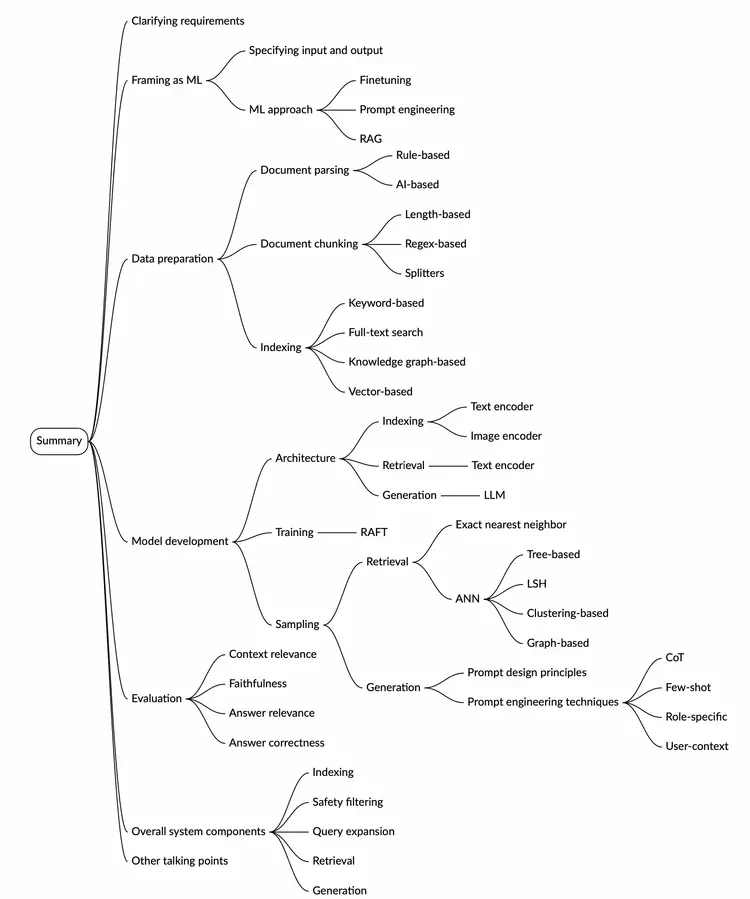
Summary#
Reference Material#
[1] Perplexity. https://www.perplexity.ai/
[2] ChatPDF. https://www.chatpdf.com/
[3] LoRA: Low-Rank Adaptation of Large Language Models. https://arxiv.org/abs/2106.09685
[4] Optical character recognition. https://en.wikipedia.org/wiki/Optical_character_recognition
[5] Dedoc GitHub Repository. https://github.com/ispras/dedoc
[6] LayoutParser: A Unified Toolkit for Deep Learning Based Document Image Analysis. https://arxiv.org/abs/2103.15348
[7] Google Cloud document parser API. https://cloud.google.com/document-ai/docs/layout-parse-chunk
[8] PDF.CO document parser API. https://developer.pdf.co/api/document-parser/index.html
[9] Character text splitter in LangChain. https://python.langchain.com/v0.1/docs/modules/data_connection/document_transformers/character_text_splitter/
[10] Elasticsearch. https://www.elastic.co/elasticsearch
[11] A Survey on Knowledge Graphs: Representation, Acquisition, and Applications. https://ieeexplore.ieee.org/document/9416312
[12] Manning, Christopher D. "Introduction to information retrieval." (2008). https://nlp.stanford.edu/IR-book/information-retrieval-book.html
[13] Modern information retrieval: A brief overview. http://singhal.info/ieee2001.pdf
[14] Learning Transferable Visual Models From Natural Language Supervision. https://arxiv.org/abs/2103.00020
[15] OpenAI finetuning documentation. https://platform.openai.com/docs/guides/fine-tuning
[16] Anthropic finetuning. https://www.anthropic.com/news/fine-tune-claude-3-haiku
[17] RAFT: Adapting Language Model to Domain Specific RAG. https://arxiv.org/abs/2403.10131
[18] Euclidean distance. https://en.wikipedia.org/wiki/Euclidean_distance
[19] Cosine similarity. https://en.wikipedia.org/wiki/Cosine_similarity
[20] Multidimensional binary search trees used for associative searching. https://dl.acm.org/doi/10.1145/361002.361007
[21] R-trees: A dynamic index structure for spatial searching. https://dl.acm.org/doi/10.1145/971697.602266
[22] Annoy library. https://github.com/spotify/annoy
[23] Similarity search in high dimensions via hashing. https://www.cs.princeton.edu/courses/archive/spring13/cos598C/Gionis.pdf
[24] Efficient and robust approximate nearest neighbor search using Hierarchical Navigable Small World graphs. https://arxiv.org/abs/1603.09320
[25] Faiss Documentation. https://faiss.ai/
[26] ScaNN. https://research.google/blog/announcing-scann-efficient-vector-similarity-search/
[27] Developer Playground. https://docs.cohere.com/v2/docs/playground-overview
[28] Chain-of-Thought Prompting Elicits Reasoning in Large Language Models. https://arxiv.org/abs/2201.11903
[29] Tree of Thoughts: Deliberate Problem Solving with Large Language Models. https://arxiv.org/abs/2305.10601
[30] OpenAI o1. https://openai.com/index/learning-to-reason-with-llms/
[31] Scaling LLM Test-Time Compute Optimally can be More Effective than Scaling Model Parameters. https://arxiv.org/abs/2408.03314
[32] Language Models are Few-Shot Learners. https://arxiv.org/abs/2005.14165
[33] Machine Learning System Design Interview. https://www.aliaminian.com/books
[34] Evaluation measure for information retrieval. https://en.wikipedia.org/wiki/Evaluationmeasures(information_retrieval)
[35] Ragas. https://docs.ragas.io/en/stable/
[36] ARES: An Automated Evaluation Framework for Retrieval-Augmented Generation Systems. https://arxiv.org/abs/2311.09476
[37] Query2doc: Query Expansion with Large Language Models. https://arxiv.org/abs/2303.07678
[38] TableNet: Deep Learning model for end-to-end Table detection and Tabular data extraction from Scanned Document Images. https://arxiv.org/abs/2001.01469
[39] CascadeTabNet: An approach for end to end table detection and structure recognition from image-based documents. https://arxiv.org/abs/2004.12629
[40] Deepdesrt: Deep learning for detection and structure recognition of tables in document images. https://ieeexplore.ieee.org/document/8270123
[41] Active Retrieval Augmented Generation. https://arxiv.org/abs/2305.06983
[42] Self-RAG: Learning to Retrieve, Generate, and Critique through Self-Reflection. https://arxiv.org/abs/2310.11511
[43] Precise Zero-Shot Dense Retrieval without Relevance Labels. https://arxiv.org/abs/2212.10496
Footnotes#
- Accurate at the time of writing. ↩
- Specifics are unknown to the public at the time of writing. ↩